Trainers

Dr Ilaria Barone

Research Fellow, Department of Geosciences, University of Padua, Italy

Dr. Ilaria Barone is a research fellow in the Department of Geosciences at the University of Padua, where she focuses on seismic surface wave analysis, near‑surface characterisation, and geophysical data processing.

She completed her studies in Environmental Engineering at Politecnico di Torino (Italy) and holds an International Master’s in Research in Exploration Geophysics from the Institut de Physique du Globe de Paris (France). After several years of professional experience in the oil & gas industry, Dr. Barone earned her PhD in Geosciences at the University of Padua, where her research has advanced methodologies for integrating active and passive seismic measurements to image and characterise the subsurface at different scales.

Her current work includes seismic surface wave analysis and inversion for near‑surface characterisation, shallow seismology, and applications such as geothermal reservoir exploration and environmental geophysics. She is also responsible for courses in Digital Data Processing and Exploration Seismology within the International Master in Geophysics for Natural Risks and Resources at the University of Padua.

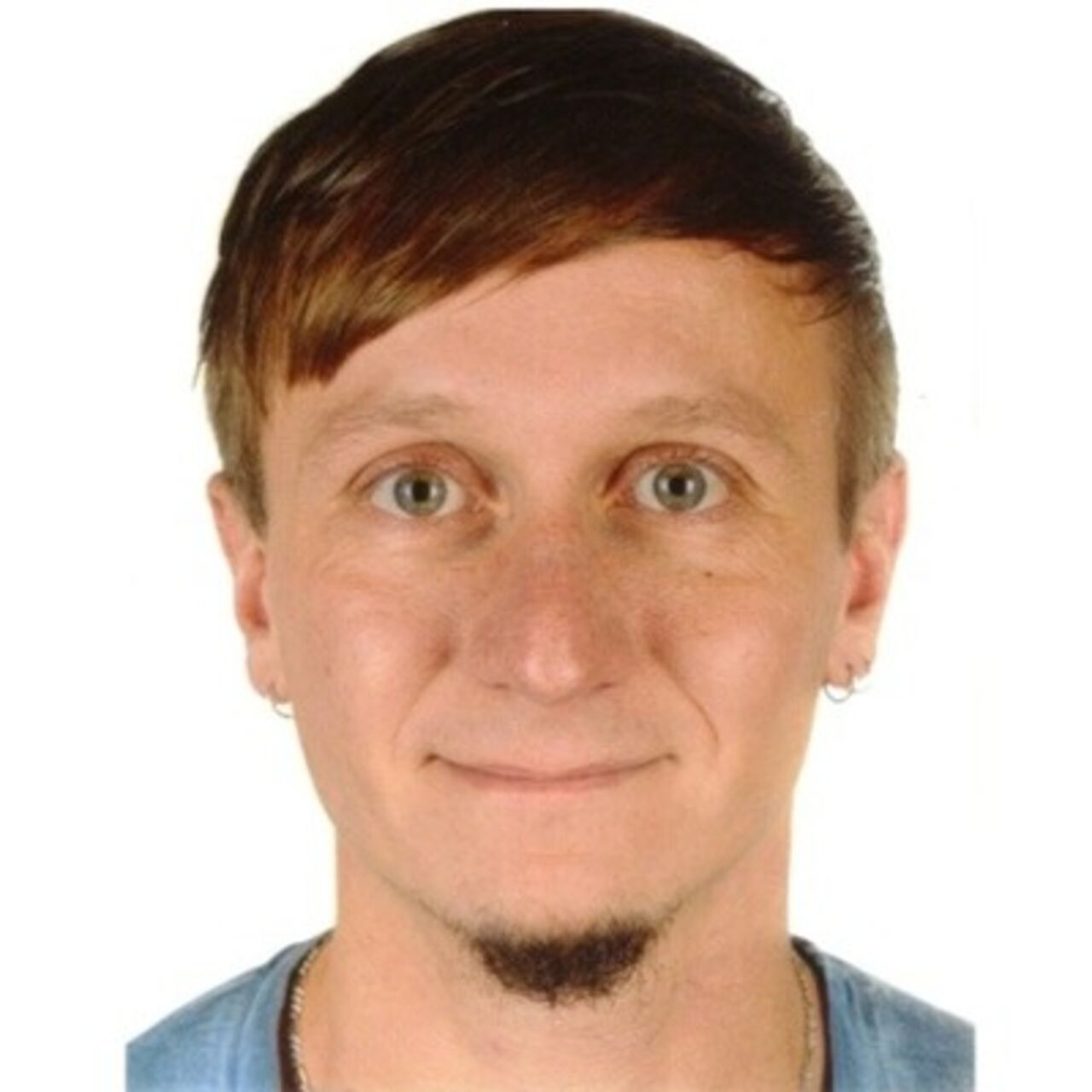
PhD student Sofia Bressan

PhD Student – Università degli Studi di Padova, Department of Geosciences

Sofia Bressan is a PhD student in Geosciences at the Università degli Studi di Padova (Department of Geosciences) in Italy, where her research focuses on tectonics, structural geology, and seismic and geophysical analysis of Earth processes. She combines field observations, remote sensing and numerical methods to investigate geological structures and their evolution, with applications to understanding seismic hazard and subsurface dynamics.

Sofia has contributed to scientific publications and presentations on the structural characterization of geological environments, integrating multidisciplinary geoscientific approaches to address questions in earthquake geology, fault mechanics and induced seismicity. Her work bridges fundamental research with practical insights pertinent to monitoring and assessing geological hazards.

Prof. Arnaud Deraemaeker

Professor of Structural Dynamics – Université Libre de Bruxelles (Belgium)

Prof. Dr.-Ing. Arnaud Deraemaeker is a professor in structural dynamics at the Université Libre de Bruxelles (ULB), where he leads research on structural health monitoring, damage detection, and vibration analysis with applications to civil engineering and infrastructure. His work focuses on the development of embedded sensing systems — including piezoelectric transducers — and advanced signal processing methods for monitoring concrete and other structural materials.

Prof. Deraemaeker teaches courses in structural dynamics and vibration analysis, and his research integrates experimental, numerical, and analytical approaches to enhance the understanding and performance of structural monitoring systems. He has contributed to European research projects and published extensively on topics bridging fundamental dynamics with practical structural health monitoring solutions.

Dr Antonio Fuggi

Geophysicist – Isamgeo Italia S.r.l.

Dr Antonio Fuggi is a geophysicist and data analyst at Isamgeo Italia S.r.l., a company specializing in geophysics, geomechanics, and seismic monitoring for energy and subsurface applications. He applies advanced seismic and geophysical methods to characterize subsurface structures, optimize monitoring networks, and support numerical analyses for natural and induced seismicity.

His research focuses on evaluating earthquake location uncertainties, analyzing ambient seismic noise, and designing monitoring networks to enhance subsurface safety and reliability. Dr Fuggi has contributed to scientific publications and collaborative projects that bridge academic research with practical monitoring solutions for energy and environmental applications.

Dr Silvio del Giudice

Research Manager – Enivibes S.r.l.

Silvio Del Giudice is the Research Manager at Enivibes S.r.l., an Italian technology company specializing in vibroacoustic monitoring of critical infrastructure. He leads research and development activities focused on the design, implementation, and optimization of the e‑vpms® (Eni Vibroacoustic Pipeline Monitoring System), a system deployed to monitor pipelines in real time and enhance safety, reliability, and environmental protection.

His work spans applied research in vibroacoustic signal analysis, structural health monitoring, and sensor-based detection of leaks, impacts, and third-party interference. Silvio has contributed to scientific publications and collaborative projects on advanced monitoring solutions for pipelines and other civil infrastructures, bridging academic research with industrial applications.

Dr Jaime Garcia Alonso

Engineer – Airbus (Spain)

Jaime García Alonso is an engineer working with Airbus in Spain, where his work has contributed to structural health monitoring and integrity assessment systems for aerospace applications. He has co‑authored research on hybrid Structural Health Monitoring (SHM) systems used in composite aircraft structures to diagnose mechanical events such as impact damage, combining advanced sensing and analysis techniques to support aircraft safety and maintenance strategies.

His contributions include research and development efforts that integrate signal analysis, experimental testing, and simulation to enhance the reliability of aircraft monitoring systems and extend their practical application across complex structural components. Jaime’s work bridges analytical methodologies with industrial aerospace engineering challenges, advancing approaches to support critical aircraft systems performance and safety.

Dr Sylvain Magne

Engineer & Researcher, CEA List – Commissariat à l’Énergie Atomique et aux Énergies Alternatives (CEA), Paris‑Saclay

Dr. Sylvain Magne is a senior research engineer at CEA List, the applied research institute of the French Alternative Energies and Atomic Energy Commission (CEA) based at the Paris‑Saclay site in Gif‑sur‑Yvette, France. He holds a PhD and an Habilitation à Diriger des Recherches (HDR), reflecting his long‑standing engagement in scientific research and mentorship.

With over 90 peer‑reviewed publications, Dr. Magne’s expertise centers on fiber‑optic technologies, optical sensing, and radiation dosimetry — including the development and application of fiber Bragg grating sensors, optically stimulated luminescence (OSL) systems, and advanced distributed sensing techniques. His work bridges foundational photonic science with practical instrumentation solutions for structural health monitoring, radiation measurement, and industrial sensing challenges.

At CEA List, he contributes to multidisciplinary research programs that advance intelligent measurement systems and high‑precision sensing in complex environments. Dr. Magne’s research has played a key role in deploying fiber‑optic dosimetry solutions for medical and nuclear applications and adapting optical sensors for distributed structural and environmental monitoring.

As part of the broader CEA research ecosystem, his work supports collaborations with academic, industrial, and international partners, integrating cutting‑edge optical technology into applications relevant to energy, infrastructure, safety, and health domains.

Dr. Eng. Florian Roemer

Dr. Ing. Florian Römer
Chief Scientist & Group Leader, Fraunhofer Institute for Nondestructive Testing IZFP, Germany

Dr. Ing. Florian Römer is a senior researcher and group leader at the Fraunhofer Institute for Nondestructive Testing (IZFP), where he heads the SigMaSense research group focused on signal processing for material data acquisition using intelligent sensor technologies.

He studied Computer Engineering at the Technische Universität Ilmenau (TU Ilmenau) and at McMaster University in Canada, earning his Diplom‑Ingenieur and later his doctorate (Dr.-Ing.) in electrical engineering with a focus on efficient multi‑channel signal processing.

Since joining IZFP in 2018, Dr. Römer has led research on advanced methods for ultrasonic and sensor data acquisition, machine learning and AI‑based signal processing, and high‑resolution parameter estimation to support nondestructive testing and structural evaluation. His group’s work aims to develop smart sensing systems that improve the efficiency, reliability, and interpretability of material and structural data.

In 2022 he was appointed Chief Scientist responsible for applied AI, signal, and data processing at IZFP, and in 2025 he became a professor at TU Ilmenau, leading the research group “Signal Processing for Intelligent Sensor Systems.” Dr. Römer’s work bridges fundamental signal processing theory with practical sensor innovation for industrial and structural health monitoring applications.

Prof. Anthony Croxford

Professor of Ultrasonics and Dynamics, University of Bristol, UK

Professor Anthony Croxford is a leading researcher in ultrasonics, structural health monitoring, and non-destructive evaluation (NDE). He holds a PhD and an M.Eng. in Mechanical Engineering from the University of Bristol, where he is currently a Professor of Ultrasonics and Dynamics in the School of Electrical, Electronic and Mechanical Engineering.

His research focuses on guided-wave structural health monitoring, ultrasonic array imaging, and defect detection techniques, with applications in aerospace, civil infrastructure, and industrial sensing. He has contributed extensively to the development of novel embedded ultrasonic and seismic sensor technologies, combining theoretical modelling with practical instrumentation and data analytics.

Professor Croxford leads the Ultrasonics and Non-Destructive Testing (UNDT) group at Bristol and has been the Principal Investigator on multiple research projects, including USES2, advancing innovative sensor solutions for infrastructure monitoring. He is also a co-founder of Inductosense Ltd., a spin-out company commercializing advanced ultrasonic sensing technologies.

His work bridges fundamental research and industrial applications, supporting collaborations with academic, industrial, and international partners to improve the safety, reliability, and performance of complex structures.

Dr Bastien Chapuis

Research Engineer, CEA List – Commissariat à l’Énergie Atomique et aux Énergies Alternatives (CEA), France

Dr. Bastien Chapuis is a research engineer at CEA List, the applied research institute of the French Alternative Energies and Atomic Energy Commission (CEA) at the Paris‑Saclay site. He holds a PhD in engineering and has extensive expertise in nondestructive testing (NDT), structural health monitoring (SHM), and advanced signal processing.

His research focuses on the development and application of ultrasonic and sensor-based inspection technologies, simulation-driven performance assessment, and probabilistic methods for reliability evaluation. Dr. Chapuis has contributed significantly to methods for probability of detection (POD) estimation and innovative SHM solutions for critical industrial and infrastructure applications.

He is active in international scientific and technical communities, including leadership roles in IIW subcommittees and COFREND conferences, bridging fundamental research and applied sensor technologies to enhance the safety, reliability, and monitoring of complex structures.

Dr Georg Glaser

Researcher, IMMS – Institut für Mikroelektronik‑ und Mechatronik‑Systeme GmbH, Germany

Dr. Georg Gläser is a researcher at IMMS GmbH, a leading institute for microelectronics and mechatronic systems in Ilmenau, Germany. He holds a PhD in engineering and specializes in advanced simulation methods, AI-driven model refinement, and design automation for complex microelectronic systems.

His work focuses on developing invasive and parametric simulation techniques that improve the reliability, efficiency, and automation of analogue and mixed-signal integrated circuit design. Dr. Gläser applies machine learning and algorithmic modelling to optimize semiconductor design and testing workflows, bridging cutting-edge research with practical industrial applications.

Through his research, he contributes to advancing high-precision sensor and embedded system technologies, supporting projects in structural health monitoring, smart sensing, and intelligent system design.

Dr Martin Grabmann

Researcher, IMMS – Institut für Mikroelektronik‑ und Mechatronik‑Systeme GmbH, Germany

Dr. Martin Grabmann is a researcher at IMMS GmbH, a leading German research institute focused on microelectronics, mechatronic systems, and embedded technologies. At IMMS, he specialises in the development of advanced modelling and simulation techniques for analogue and mixed‑signal integrated circuits, with a particular interest in the application of machine learning and automated design methodologies to improve design verification, behavioural modelling, and performance optimisation.

His work contributes to enhancing the efficiency, reliability, and automation of circuit design processes for complex systems, supporting research and industrial applications in microelectronics and smart sensing technologies. Dr. Grabmann has co‑authored peer‑reviewed research on topics including model‑error estimation, behavioural modelling, and anomaly detection in electronic design workflows, reflecting his commitment to bridging theoretical innovation with practical engineering challenges.

Dr Jean-Marie Hénault

Research Engineer, EDF R&D – Électricité de France, France

Dr. Jean‑Marie Hénault is a research engineer at EDF R&D, the research and development division of Électricité de France, where he focuses on nondestructive evaluation (NDE) and structural health monitoring (SHM) for infrastructure and energy systems. His work encompasses the application of advanced ultrasonic inspection methods, distributed fibre‑optic sensing, and measurement technologies to characterise and monitor complex concrete structures and critical assets.

He has played a key role in collaborative research and doctoral training, supervising and guiding industrial research projects that bridge fundamental sensing methodologies with practical engineering challenges in structural assessment. Dr. Hénault’s contributions support the development of innovative monitoring solutions that enhance asset integrity, safety, and lifecycle management for infrastructure within the energy sector.

Dr Stéphane Villalonga

Research Expert, CEA – Commissariat à l’Énergie Atomique et aux Énergies Alternatives, France

Dr. Stéphane Villalonga is a senior research engineer and expert at the French Alternative Energies and Atomic Energy Commission (CEA), where he leads work on the development of advanced composite materials and high‑pressure hydrogen storage systems. With a background in chemical and materials engineering, his research has focused on type IV composite pressure vessels for hydrogen storage, enhancing their design, manufacturing processes, and structural performance for energy applications.

At CEA, Dr. Villalonga has been involved in major research and innovation projects on hydrogen on‑board storage, contributing to European collaborations and coordinated initiatives to advance low‑carbon energy technologies and sustainable mobility. His work bridges foundational research, industrial partnership, and applied engineering to support the transition to hydrogen‑based systems. 

Prof. Giorgio Cassiani

Full Professor of Applied Geophysics, University of Padua, Italy

Prof. Giorgio Cassiani is a Full Professor of Applied Geophysics in the Department of Geosciences at the University of Padua, Italy, where he conducts research and teaches in the fields of geophysics, environmental geophysics, and hydrological and geotechnical applications.

He holds advanced degrees including a Doctorate in Applied Geophysics and has held academic appointments and research positions in Italy and abroad. Prof. Cassiani’s research encompasses innovative geophysical methods for environmental and subsurface investigations, integration of surface and subsurface data, and the application of geophysical techniques to assess natural hazards, hydrogeological processes, and complex subsurface systems. His work is widely published in international scientific journals and includes leadership of collaborative research projects at national and European levels.

At the University of Padua, he also plays an active role in coordinating academic programmes and field‑based geophysical education, contributing to the next generation of scientists and engineers in the geosciences.

Dr Gwénola Michaud

Geophysicist & Consultant, Geosciences & Monitoring Consulting (former Isamgeo contributor)

Dr. Gwénola Michaud is an experienced geophysicist with a strong international career in seismic monitoring, reservoir characterisation, and subsurface data analysis. She holds an MSc in Geophysics from the École et Observatoire des Sciences de la Terre in Strasbourg (France) and a PhD in Geophysics from the Colorado School of Mines (USA), where her work was sponsored by CGG.

Since 1998, she has worked in the oil and gas industry, leading multidisciplinary teams and projects on passive seismic, electromagnetic, gravity, and multi‑component borehole data, as well as integrated modelling and joint inversion methodologies across the UK, Japan, and Italy.

From 2023 onwards, Dr. Michaud has collaborated with Isamgeo Italia S.r.l. on geophysical data processing and project management for geothermal and structural health monitoring in high‑seismicity regions, bringing together technical innovation and practical insights for energy and infrastructure applications.

In addition to her consulting work, she is involved in professional leadership roles, including serving as Chief Editor of the European Association of Geoscientists & Engineers (EAGE)’s “First Break” journal and contributing to coaching and professional development programmes within the geoscience community.

Dr Silvia Krug

Senior Researcher, IMMS – Institut für Mikroelektronik‑ und Mechatronik‑Systeme GmbH, Germany

Dr. Silvia Krug is a senior researcher in the System Design Department at IMMS GmbH in Ilmenau, where she focuses on embedded systems design, wireless sensor systems, and energy‑efficient communication technologies for distributed monitoring solutions. She received her M.Sc. and Dr.‑Ing. degrees in Computer Engineering with a focus on communication networks from the Technische Universität Ilmenau in Germany in 2013 and 2017, respectively.

Her research interests span low‑power IoT communications, sensor network protocols, and scalable distributed systems, with applications in smart monitoring systems, environmental sensing, and adaptive embedded platforms. Dr. Krug has contributed to projects developing LoRaWAN‑based retrofit monitoring solutions and other connected sensor technologies that support intelligent infrastructure and environmental applications.

In addition to her work at IMMS, she holds an adjunct position as Assistant Professor at Mid Sweden University, where she extends her collaboration in the design and analysis of distributed communication systems and edge computing for sensor networks.

Dr Ernst Niederleithinger

Head of Division – Non‑Destructive Testing Methods for Civil Engineering, BAM, Germany

Dr. Ernst Niederleithinger is a distinguished geophysicist and leader in non‑destructive testing and structural health monitoring at the Bundesanstalt für Materialforschung und ‑prüfung (BAM), the Federal Institute for Materials Research and Testing in Berlin. He holds a Diploma and PhD in Geophysics, as well as a Habilitation, and has been with BAM since 2001, where he currently heads the Division for “NDT Methods for Civil Engineering.”

Dr. Niederleithinger’s work focuses on adapting and advancing geophysical imaging, ultrasonic and acoustic techniques to assess and monitor concrete structures, infrastructure, and materials, bridging methods from seismic geophysics with industrial non‑destructive evaluation applications. He also contributes to international standards and serves as a lecturer at RWTH Aachen University.

His research spans innovative NDT and SHM systems, data processing, and long‑term monitoring strategies, supporting safer, more reliable assessment of aging infrastructure and complex structural systems.

Dr Anna Sklodowska

Postdoctoral Researcher, Bundesanstalt für Materialforschung und ‑prüfung (BAM), Berlin, Germany

Dr. Anna Sklodowska is a postdoctoral researcher at the Bundesanstalt für Materialforschung und ‑prüfung (BAM) in Berlin, where she works on acoustic emission analysis and non‑destructive testing (NDT) methods for assessing structural integrity and material behaviour. She holds a Master’s degree in Civil Engineering from the Warsaw University of Technology and a second Master’s in Geohazards from the University Grenoble Alpes.

Dr. Sklodowska earned her PhD in Geophysics from the University of Trieste, Italy in 2023, where her research focused on seismological methods and soil‑structure interaction. At BAM, her primary interests include the application of seismology‑based techniques, acoustic emission monitoring, and coda wave studies to nondestructive testing challenges, bridging advanced wave‑based analysis with practical monitoring solutions for infrastructure and materials.

Dr Julius Oeff

Development Engineer, Bundesanstalt für Materialforschung und ‑prüfung (BAM), Berlin, Germany

Dr. Julius Oeff is a development engineer at the Bundesanstalt für Materialforschung und ‑prüfung (BAM), where he contributes to research and engineering in embedded systems and monitoring technologies. He holds a Master’s degree in Physical Engineering/Medical Physics, with academic research on the 3D sound field characterization of ultrasound transducers, and a Bachelor’s degree focused on photodetector ageing phenomena.

Before joining BAM in September 2024, Dr. Oeff worked on a research project at the Berliner Hochschule für Technik that focused on AI‑based object detection and 3D reconstruction for integration of 3D‑printed metal parts, and he led development of both hardware and software for a solar power feed‑in monitoring system. He has also supervised Bachelor theses and supported laboratory experiments in physical measurement technology.

At BAM, Dr. Oeff’s work bridges embedded system design, sensor technology implementation, and applied research, contributing to innovative solutions in structural monitoring and intelligent instrumentation.

Dr Théodosia Stratoudaki

Senior Lecturer, Department of Electronic & Electrical Engineering, University of Strathclyde, UK

Dr. Theodosia Stratoudaki is a Senior Lecturer in the Department of Electronic and Electrical Engineering at the University of Strathclyde (UK), where she leads research in laser ultrasonics, remote ultrasonic sensing, and optical imaging for non‑destructive evaluation (NDE). She obtained her PhD in laser ultrasonics from the University of Warwick and subsequently held postdoctoral positions at the University of Cambridge and University of Nottingham before joining Strathclyde in 2017.

Her research focuses on using light to generate and detect ultrasound, enabling remote phased‑array ultrasonic imaging and advanced material characterisation without contact. This work has important applications in non‑destructive testing, in‑line manufacturing process monitoring, and structural evaluation in extreme environments. Dr. Stratoudaki’s projects span innovative sensor development, signal processing, and adaptive imaging techniques that bridge fundamental photonics and practical NDE solutions.

She also plays active roles in professional committees, including co‑chairing the Physical Acoustics Group of the Institute of Physics and contributing to standards committees in ultrasonics, reflecting her engagement with both academic research and the broader engineering community.

Dr Gustavo Baños Lapuente

Structural Analysis Engineer – Airbus Defence and Space (Spain)

Gustavo Baños Lapuente is a Structural Analysis Engineer at Airbus Defence and Space in Spain, where he has worked since 2000. He specialises in the development and maintenance of advanced stress analysis methods and tools for military and aerospace structural programmes, with a particular focus on composite materials and structures.

His expertise encompasses the mechanics, damage mechanisms, and failure behaviour of composite materials used in aircraft structures, and he contributes to research on understanding and predicting material response under mechanical loads. Gustavo has shared his knowledge through training modules and technical contributions on damage mechanisms and growth in composite materials, helping bridge analytical approaches with practical aerospace applications.

Prof. Giovanni Delgaldo

Professor of Electronic Measurements and Signal Processing – Technische Universität Ilmenau (Germany)

Prof. Dr.-Ing. Giovanni Del Galdo is a professor in the Faculty of Electrical Engineering and Information Technology at Technische Universität Ilmenau in Germany and leads the Electronic Measurements and Signal Processing (EMS) research group. His expertise spans the analysis, modelling, and design of multidimensional signals and systems, advanced measurement systems up to sub‑THz frequencies, and methods for high‑resolution parameter estimation and compressed sensing.

He holds a Laurea degree in Telecommunications Engineering from Politecnico di Milano and a Dr.-Ing. degree from TU Ilmenau. Prior to his current role, he has contributed extensively to research in audio and communication signal processing and has developed measurement and signal processing techniques for communications and sensing applications. His work bridges theoretical foundations with practical system implementations, contributing to innovations in measurement technology and signal analysis for complex engineering challenges.

Dr Yves Van Ingelgem

CEO – Zensor (Belgium)

Dr Yves Van Ingelgem is the CEO and founder of Zensor, a Belgian technology company and spin‑off of the Vrije Universiteit Brussel that develops sensor‑based integrity and condition‑monitoring solutions for infrastructure and industrial assets. Zensor’s approach combines advanced sensing systems with automated data analytics to turn raw sensor data into actionable insights that enhance safety, reliability and lifecycle performance of structures such as bridges, tunnels, wind turbines and production facilities.

Prior to founding Zensor, Yves completed his PhD in materials science and civil engineering, and his academic work laid the foundation for innovative monitoring technologies that detect phenomena such as corrosion and structural degradation at early stages. As an entrepreneur and researcher he bridges multidisciplinary engineering, data analytics and practical monitoring solutions to support proactive maintenance and sustainable infrastructure management.